Understanding forest space potential
Ornamental forest spaces are extremely promising when you consider the potential of each layer and constituent part in a garden. A forest garden can have as many as eight layers, all with its own place in the sun or shade. This lets you cram a lot of plants into a small space, tall shade trees, low ground cover, and even climbing vines. These layers correspond to what you find on the edge of a forest or where young forests are still growing, and hence, where many types of plants and even fungi co-exist.
- Begin by examining what’s existing in your space. Make a walk through and record the types of trees, shrubs, and groundcovers growing. Test to see if the trees are big or small, if shrubs are dense or sparse, and which plants are ground-hugging. Look for bare spots or areas where plants scuffle with one another. Try to spot each possible layer: canopy trees, small trees or big shrubs, regular shrubs, herb plants, ground cover, roots, and climbing plants. For instance, a towering oak could comprise the canopy, with smaller dogwoods, blueberry bushes, ferns, creeping thyme, carrots, and climbing roses making up the rest. Don’t forget to keep an eye on your plant health—some may need to be pruned or replaced, while others may be thriving on their own.
- Sunlight and soil are the next items to inspect. Observe sun paths on your space in both summer and winter. A few locations receive full sun throughout the year, while others are predominantly shaded. This is important because every layer of your forest garden will require some degree of sunlight or shadow. Draw a rough map of your garden and plot where the sun shines at various hours and seasons. Then glance at your soil—dig a small hole somewhere and determine if the soil is sandy, clay, or rich and dark. Wet spots and dry spots—mark them up, too. This way you know where you have space for new additions, such as a pond or bench.
- How the floor lies—flat or sloping—forms what’s possible. Slopes can carry water quickly, so you may want to plant deep-rooted plants there to prevent soil erosion. Flat spaces are susceptible to becoming marshy after a rain, thereby offering opportunities for moisture-loving species. Notice where water pools after a storm and where it drains fast. Leveraging the land’s contours can assist you in creating spaces for benches, meandering walks or even a miniature terrace.
- Wildlife and microclimates are a big part of making a forest space thrive. Identify evidence of birds, insects, or small mammals and consider what plants or features might assist them. For instance, berry bushes can nourish birds, and rocks or logs can protect insects. See if some spots are warmer or colder, drier or more humid than others. These are microclimates. They allow you to cultivate a broader spectrum of flora, such as situating ferns in moist, shaded areas or desert flowers in sunny dry patches.
The other key is to remember that climate really does matter. Select plants that can cope with your anticipated weather, temperature fluctuations, and rainfall. There are going to be places where those things are going to change more in the future as well, so choose some species that can deal with heat, cold, or drought. Forest gardens take their time—years, sometimes—to fill in and begin to appear wild, lush, and self-sustaining. Many people enjoy this wild appearance, as it typically attracts increased bird, insect, and wildlife activity into the area.
Selecting complementary plants and trees
Ornamental forest spaces really pop when you pair together trees and plants that look good together. Choosing native and seasonal varieties ensures your garden thrives year-round and benefits the surrounding ecosystem. Native plants and trees enhance soil quality and typically require less maintenance. Trees such as flowering dogwoods and maples demonstrate how different forms and colors can maintain interest in a garden during seasonal transitions. By simply choosing grass, shrubs, and perennials that match your climate, you’re giving pollinators a chance to survive and making care a little simpler.
These layers help your forest garden add depth and life. Begin with tall canopy trees for shade and structure. Next, layer in mid-story shrubs. Consider hardy rose bushes or tall bamboo for a lush appearance. Spruce it up with low-growing perennials and ground cover to fill in any holes. Mixing heights not only is aesthetically pleasing, but assists in giving each plant proper sun and water.
Sprinkling flowering bulbs with colorful shrubs provides your space with bursts of color at various points in time. Spring bulbs like tulips and daffodils arrive early, while summer and fall blooms such as hydrangeas or azaleas keep the garden colorful further into the season. Red or gold-leafed bushes and pink or blue flowers can add more visual interest and accentuate your focal trees.
Mixing plants with varying textures and shades creates an animated backdrop for your trees. For instance, match soft ferns with the coarse bark of oak or maple. Pair fine-leaved grasses against the bold, broad leaves of hostas. This mix of leaf shapes, sizes, and colors adds dynamism to the space. Potted plants allow you to rotate color and varieties as the season changes, which gives you control over the aesthetics. Mulch is another easy flourish. It protects roots, preserves moisture, and tidies the space.
When you choose what to plant, limit yourself to 5 or 6 varieties and repeat them throughout the area. This ties the garden together and makes it look more cohesive, not chaotic or haphazard. These patterns guide the eye to flow through the space and induce serenity.
Recommended species for varied climates and ornamental goals:
- Flowering dogwood (Cornus florida)
- Japanese maple (Acer palmatum)
- Hardy rose bush (Rosa rugosa)
- Tall bamboo (Phyllostachys spp.)
- Blue fescue grass (Festuca glauca)
- Autumn fern (Dryopteris erythrosora)
- Hydrangea (Hydrangea macrophylla)
- Daylily (Hemerocallis spp.)
- Hostas (Hosta spp.)
- Tulip bulbs (Tulipa spp.)
This list spans trees, shrubs, perennials, and bulbs, all adapted to a variety of climates. They provide color, texture, and seasonal variation while attracting wildlife and demanding minimal upkeep.
Creating functional pathways and access
Functionally speaking, pathways are the backbone of any ornamental forest space. They assist in directing foot traffic, allow you to access every corner for maintenance, and link the major elements. The initial issue to resolve is the layout. Most begin with a rough sketch on paper or a digital map such as Google Maps to map out key trees, water points, and buildings. This design method guides me in determining where to make paths, particularly when working with several garden strata—from tall trees and bushes to groundcovers and herbs. By planning access early, you can get around easily to water, harvest, or trim branches later.
Meandering paths – gravel or stone – work well in forest gardens. Curves seem more natural and blend into the wild appearance of these spaces. Gravel is cost efficient and drains nicely. Stone offers a more finished and permanent appeal. Both can be installed around roots and trunks without damaging surrounding vegetation. Incorporating mulch or bark chips aids paths in merging with the forest floor so they don’t stand out. Bordering with local stone or wood keeps it all in harmony with the setting and avoids sharp edges that interrupt the woodland vibe.
Lighting is another important aspect of practical access. Solar lights are fantastic in decorative woodlands because they require no wiring and can be installed wherever the sun shines. Pathway lights not only make night walks safe but also help flaunt features like ponds, statues, or benches. To add a bit of drama, LED spotlights can illuminate a tall specimen tree or garden statue. Opting for solar or LED lights is an excellent choice because they are less energy-consuming and have a low impact.
Paths should be more than merely taking you from point to point. They can unite secret nooks, vegetable gardens, water features, or even fun accents such as fairy houses and gnomes nestled behind a shrub. These whimsical touches introduce a spirit of magic and adventure. Ensuring paths are a minimum of 90 cm wide allows you to walk side by side for company or push a wheelbarrow through, which is useful for routine maintenance. Paths should be even and not too steep, so that everyone from children to older individuals can navigate them with ease.
Making access in a decorative forest is a never-ending task. It requires patience, as plants grow and morph with time. Pathways might need to be moved or expanded as trees grow or as you introduce new elements. My guiding principle is always to marry aesthetics with functionality so that the woods remains welcoming but still practical for regular maintenance. When you break the job down into steps like picking path spots, choosing materials, and adding lights, it ceases to feel overwhelming. Working one piece at a time leaves the process clear and allows you flexibility to adjust as the garden takes shape.
| Key Feature | Connected by Pathways? | Example Material | Accessory Option |
| Canopy Tree Area | Yes | Stone pavers | LED spotlight |
| Shrub/Bush Layer | Yes | Gravel | Solar path light |
| Water Feature | Yes | Mulch | Wooden bridge |
| Seating Area | Yes | Stone or gravel | Bench, fairy house |
| Harvest Zone | Yes | Bark chip | Wheelbarrow-friendly edge |
Integrating seating and gathering areas
Decorative woodland pockets seem to welcome you more when there are seating and gathering areas. Thoughtful seating areas bring people together and connect them with the landscape. Tucking outdoor benches, log stools, or hammock chairs into shaded nooks and crannies makes it simple to linger and soak in the setting. Whether it is shade from trees or from overhead elements like pergolas and shade sails, cool breezes make these spaces feel comfortable even on warm days. Corner seating, foldable tables, and wall-hugging benches work well for small yards or patios. These alternatives save space and still provide places to relax or convene.
When you’re designing a space, furniture clustered in small groups, rather than individual chairs scattered hither and thither, promotes discussion. When chairs and benches face each other in clusters, folks are more prone to talk, share a snack, and spend time together. Wooden coffee tables in the middle provide a place for drinks or books, and weatherproof cushions bring coziness to longer stays. Combining a variety of seating, such as a porch swing, low stools, and soft lounge seats, infuses the space with a dynamic, inviting vibe. These tiers of seating provide a place for everyone, from little ones to adults, to find their own cozy nook.
By including seating and gathering areas, you can customize these spaces to fit what people want most from the space. A raised bench allows adults to easily observe kids playing nearby, whereas a hammock chair placed in a quiet corner beckons lone reading sessions. Incorporate seating and gathering spaces. Adding a fire pit or outdoor fireplace serves as a natural meeting area. All of these warm amenities are a blessing on cool evenings, extending the room’s usefulness to even more seasons. Pergolas and other overhead elements contribute shade and make the space more intimate. Once the seasons shift, patio cushions and tables constructed from weatherproof wood or metal endure and require minimal maintenance.
A clever plan flows like stepping from room to room. A forest room functions most optimally when it includes a dining room near the house, a sitting room for lounging, and a fireplace further away for late night get-togethers. This obvious flow creates a space that is readily usable and prevents it from feeling cramped.
Below is a comparison table that shows different seating and gathering features for ornamental forests:
| Seating Type | Key Features | Best Use Case |
| Outdoor benches | Durable, can seat many people | Shaded nooks, open clearings |
| Log stools | Natural look, movable | Flexible seating, kids’ play |
| Hammock chairs | Relaxing, gentle sway | Quiet corners, solo reading |
| Wall-hugging benches | Save space, neat lines | Small yards, patios |
| Foldable tables | Easy storage, flexible | Casual meals, small gatherings |
| Wooden coffee tables | Surface for food, drinks | Central gathering points |
| Weatherproof cushions | Comfort, all-weather | Any seating area |
| Fire pit/fireplace | Warmth, focal point | Evening gatherings, year-round |
| Pergolas/shade sails | Sun protection, visual interest | Over seating/dining areas |
| Porch swing | Classic look, gentle motion | Entryways, open lounge spaces |
Enhancing with water and stone features
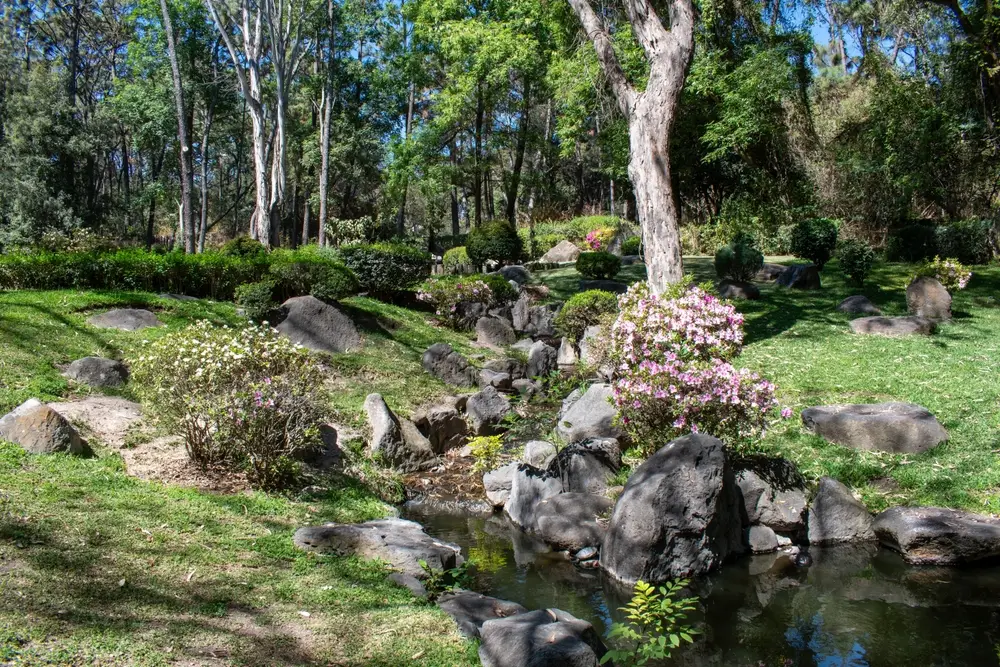
Water and stone elements add tranquility and dimension to decorative woodland areas. They’re great in just about any climate and garden size, providing a combination of texture, sound, and visual interest that has universal appeal. With careful design, these elements attract people and provide wildlife a sanctuary, fostering a vibrant yet serene environment.
A little pond or stream works into most forest spaces and impresses with its soothing sound and refreshing appearance. Water bowls or birdbaths are another easy way to incorporate water, and they suit both large and diminutive gardens. A few small bowls of water, colored to add interest, become dazzling displays, not just a backdrop. Birdbaths lure birds, butterflies and other creatures, increasing the garden’s liveliness and adding animation. If you’re new to water features, a birdbath is simple to install and easy to care for.
Stone elements provide form and structure to the gentle curves of woodland flora. Natural stone edging defines garden beds and walkways, keeping them tidy while blending with the natural aesthetic. Large boulders can disrupt open expanses and can provide anchors for planting. Incorporating stone into water features like a pond or small stream allows the design to meld with the forest and adds a nice rustic touch. Stones can border wall water blades, which combined with climbing plants, provide flow and privacy. In larger gardens, a cascading waterfall provides a dramatic focal point and calming background.
Fire pits or stone circles create natural gathering spots where, like moths to a flame, people just want to hang out. By situating them near water features, visitors get the experience of hearing trickling water while nestled around a cozy campfire. A stone circle makes for a contemplative nook, nestled into a shady garden corner. The local or natural stone ties the look to the ground and keeps it timeless.
Planting is important around water and stone features. Water lilies give color with their flowers, and papyrus, taro, and other plants add lush, green shapes. On the edges, succulents, bonsai trees, Japanese sedges, and ferns bring in layers of texture and prevent it from looking empty. They do well in many areas and are relatively low maintenance, which makes them a smart selection for gardeners with limited time.
- To choose solar-powered pumps and pond lighting kits: * Check pump size and strength. Choose one that corresponds to your pond’s capacity (liters) so the water continues to circulate but doesn’t spill over.
- Select a solar pump with a backup battery if you desire water flow on overcast days.
- Seek out pond lighting kits that have waterproof LED lights for safety and durability.
- Ensure the kit includes adjustable light colors or brightness for your mood or occasion.
- Choose ones with timers or remote controls for convenience.
- Select brands that have positive reviews and instructions on how to set up and care for them.
- Make sure the sun panel can be installed in a sunny area away from shade to keep it functioning optimally.
Water features with LED lights can emit a gentle glow after dark and stone features shimmer and reflect the light, adding dimension. Forest spaces with these design ideas feel more enchanting and lush, day or night.
Incorporating art, lighting, and decor
Art, lighting and decor define the ambiance and appearance of any decorative forest area. With nature-inspired visuals, including art and wall decor, you’re channeling the outdoors indoors and creating a soothing, mindful atmosphere. Select a color scheme with earthy browns, soft neutrals, and deep greens. These shades are perfect for a forest feel and mix with contemporary, farmhouse, Asian or Scandinavian decor. If choosing wall art, go for watercolors for a soft aesthetic or geometric prints for more impact. Figurative works can provide a more personal touch, while symmetrical imagery complements contemporary and Scandinavian spaces. Framing it with something natural, like reclaimed wood, amplifies the organic appeal and gives the space a warm, grounded feel.
Lighting transforms a forest space, particularly as day fades to night. Drape string lights or lanterns along pathways, trees, or seating areas to add a gentle, enchanting illumination. Swap in warm white or soft yellow bulbs for a cozy aesthetic. Plant spotlights at the foot of trees or statues to silhouette their figures after dark. Glass, metal, or bamboo lanterns add both function and charm. For sustainable picks, solar lamps reduce energy consumption and function wirelessly. Lighting guides people in safe navigation, creates atmosphere, and highlights art or plants.
Sculptural decor adds a special accent to the space. Put rustic wooden bridges over babbling brooks or some nature trails for a bit of added structure and magic. Trellises not only provide a base for climbing plants but can be considered living works of art. Sculptural pieces, such as stone animals, abstract forms, and carved wood, serve as centerpieces. They can be bold and punchy or subtle and nuanced based on their size and placement. Birdhouses, feeders, and pollinator habitats combine function with flair. They attract wildlife and assist local ecology in addition to serving as decoration. Choose patterns to complement the overall theme, whether it is minimalist or intricate.
As for art, lighting, and decor, keep in mind your climate and maintenance preferences when selecting materials. Weather-resistant finishes make pieces last longer outdoors. Environmentally friendly options are great for anyone wanting to reduce their footprint. Some good options include:
- Reclaimed wood
- Stone and clay
- Recycled metal
- Bamboo
- Weather-treated textiles
- Powder-coated finishes for metal surfaces
A combination of art, lighting, and sculptural decor infuses balance and cohesion to the room. These layers make the wood space feel more finished and soothing. Nature-inspired art and eco-friendly materials maintain a serene, healthy environment that fits a variety of aesthetics. Every decision, from light fixtures to artwork, influences the space’s aesthetics and ambiance and integrates it with contemporary and traditional styles.
Fostering sustainability and community engagement
By designing ornamental forest spaces to foster sustainability and community, you can create places that endure. These spaces can be more than just beautiful. They can support local biodiversity, educate visitors about nature, and create a sense of community.
Plant native wildflowers and incorporate birdhouses, bug hotels, or little ponds to provide local birds, insects, and animals with a protective habitat. Native plants grow better with the surrounding climate and soil, so they require less maintenance and water in the long run. Around the wildflower patch, for example, pollinators such as bees and butterflies bring other plants to bloom and maintain the ecosystem’s strength. Simple touches, such as a log pile for beetles or a birdbath, go a long way. Small steps like these not only benefit the environment, but they allow individuals to experience more wildlife firsthand.
Natural mulch and compost are easy, clever methods to sustain soil. Mulching with wood chips, leaves, or straw prevents weeds and retains moisture, so you water less. Compost made from food scraps and garden waste nourishes the soil and cuts costs on store-bought items. These selections play out in both tiny urban gardens and larger country plots. They reduce waste, conserve water, and support robust plants, all while contributing to building nutritious, living soil right under your toes.
Community planting days or workshops provide an opportunity for neighbors and friends to contribute. Folks can get some hands-on experience learning how to tend plants, identify bugs, or create their own compost. When everyone pitches in, there’s more ownership in the area and it’s less likely to get overlooked or neglected. Others host workshops on native plants or creating a wildlife corner, which makes you feel more engaged. These activities help to promote long-term success by transmitting skills and cultivating interest in caring for greenspaces.
Communal areas, reminiscent of hidden gardens or sun-dappled meadows, beckon residents to unwind, connect, and nurture the soil collectively. These points of interest can display regional cultures or customs, such as crafts from local artisans or flora associated with folklore. Maintaining it with obvious walkways or manicured flowerbeds communicates that the space counts. Pride and ownership multiplies when they witness the fruits of their labor and spread it to the world. Whether it is a community garden or a forest space, these personalized green spaces can be a way to learn about the environment and help people feel like they belong.