Understanding smart irrigation principles and their role in plantation management
Smart irrigation refers to utilizing technology to manage the timing and amount of water delivered to crops. It combines sensors, controllers, and data systems to adjust water flow to plants’ specific needs. In the old days, we scheduled or hand-watered. These techniques employ guesswork and can waste water if it rains or the soil is already moist. Smart irrigation considers soil moisture, weather, and plant requirements in real-time, utilizing that data to irrigate only when necessary. This conserves water, reduces expenses, and improves plant growth. Where water is scarce or expensive, such a system makes a huge difference.
Automated scheduling is another key component of smart irrigation. Systems time waterings according to data, not a schedule. They have sensors in the ground that monitor moisture. Weather stations monitor rain, sun, and wind. The system aggregates this information and activates or deactivates water flow as necessary. For example, if it rains during the night, the system misses the next watering. This reduces waste and prevents overwatering or underwatering of the plants. It aids in keeping the soil robust and prevents issues such as erosion from excessive runoff. In big plantations, small adjustments like this end up saving thousands of liters of water every week.
Remote monitoring tools allow you to monitor your crops from anywhere. Managers can access a dashboard via a phone or computer. They receive on-the-spot updates on soil, weather, and water use. In the event of a leak, clog, or broken pipe, the system alerts immediately. In other words, there is less hand-to-land monitoring. It means fewer errors, like leaving water running or overlooking a dry patch. Workers can solve issues more quickly, and it saves on labor expenses. In other plantations, teams deploy drones or cameras to inspect vast fields, further simplifying the detection of issues.
Smart irrigation is most effective when it connects with the entire plantation management. This means linking water usage information with crop planning, fertilizer applications, and pest management. When all these systems communicate with one another, managers obtain a comprehensive perspective on plantation health and resource consumption. For instance, if the system knew when fertilizer was added, it could moderate watering to help nutrients soak in. In some plantations, apps aggregate all this information so every decision is informed by up-to-date data. This keeps expenses low, increases production, and stabilizes the entire endeavor.
Exploring technological tools and sensors for optimized irrigation
Smart irrigation combines sensors, data, and automation to assist plantations in conserving water and maintaining the health of crops. These technologies provide a real-time perspective on field conditions, simplifying water conservation, reducing labor, and increasing yields. Common tools and sensors found in plantations include:
- Soil moisture sensors: Track water in the root zone, helping prevent overwatering by showing when soil is dry or too wet. They are available as wired or wireless units, costing between $99 and $165.
- Weather-based controllers: Use local climate, rainfall, and forecast data to adjust watering times. They can save 15 to 35 percent more water by adjusting schedules according to the daily weather.
- Rain sensors: Pause irrigation during rain, which stops waste and run-off. Others pay for themselves in under a year.
- Flow meters measure water use and spot leaks in the system.
- Drones: Map fields from above, giving quick, high-resolution images to guide targeted watering and show dry or wet spots. These maps can save 18 to 28 percent of water by showing where to direct your attention.
Internet of Things (IoT) devices allow you to monitor and operate irrigation remotely. From a phone or computer, you can turn irrigation systems on or off, check sensor readings, and detect issues quickly. These systems function smoothly on both small farms and vast plantations, enabling users to respond to changes in the moment. IoT devices integrate with other farm tech for unified management, allowing teams to view pest, fertilizer, and water data from a single dashboard. This holistic perspective saves time and aids with quicker, intelligent decision making.
Smart controllers are the brains behind these. Basic models simply turn water on or off at pre-determined times. More sophisticated ones ingest data from sensors, weather stations or satellites to refine schedules. Compatibility varies: some work with older pipes and valves, while others need new wiring or wireless upgrades. For instance, weather-based controllers can retrofit most existing setups, but some premium AI-driven models might require additional sensors or software. As a user, you just have to see what works best with your current arrangement and budget.
Data analytics platforms transform raw data from sensors into actionable insights. They display trends, notify you of dry or wet patches and assist in scheduling irrigation for the week or season. Platforms can alert you to leaks, blocked lines, or even upcoming weather. With AI and predictive modeling, they can reduce water use by as much as 50 percent compared to traditional approaches. Data-driven management can increase yields by 20 to 25 percent, as crops receive water when they need it, but not excessively. These platforms usually work with mobile devices, so users can respond to updates wherever they are.
Climate and soil-driven irrigation strategies for plantations
Smart irrigation is most effective when it can be tailored to the climate and soil requirements of individual plantations. Knowing both aids in applying water correctly, reduces waste, and keeps plants thriving. Climate-based controllers, known as evapotranspiration (ET) controllers, operate with the help of local weather data. These tools monitor sun, rain, wind, and humidity. In this way, they assist in determining when and how much to irrigate. Locations with dry seasons or large temperature fluctuations require schedules that vary throughout the season. Scheduling needs to accommodate rainy, dry, hot, or cool spells, not just run on a timer. Implementing these systems can reduce water consumption by up to 50% compared to outdated techniques, an important consideration in water-short regions.
Soil type and structure are as important as climate. Sandy soils drain quickly, so they require more frequent but lighter irrigation. Clay soils retain moisture more effectively and are slower to dry out, so watering less often but more deeply is ideal. Silt comes in the middle. Understanding the type of soil beneath a plantation guides an appropriate strategy. Soil moisture sensors, installed in a location distant from sprinklers, roots, sidewalks, and walls, provide the most accurate measurement of soil wetness. The appropriate threshold value at which to trigger irrigation varies with soil and plant type, but is frequently between 10 and 40 percent. If sensors indicate soil is still wet, the system bypasses watering, conserving water and money. Research abstracts show soil moisture controllers reduce irrigation by 72 percent and water use by 34 percent in droughts.
Climate moves quick, and brilliant irrigation plans have to sprint alongside. Strong winds can affect the way water is dispersed onto the soil surface, reducing infiltration and leaving dry areas. Rain sensors assist. They stop watering when it rains, so it isn’t wasted. Such sensors can earn their keep in under a year if monitored and maintained properly. For best effect, smart irrigation should combine real-time weather forecasting with soil data. This combination allows the system to adjust schedules on the fly, based on what’s in the ground and what’s in the air.
A checklist for tailoring irrigation:
- Check the local climate and note seasonal changes
- Test and map the soil type and structure
- Plantation-specific climate and soil-driven irrigation strategies include placing soil moisture sensors in locations that represent an accurate average, away from strange patches.
- Set threshold values for each soil and plant type
- Use ET controllers to retrieve local weather and forecast information.
- Sprinkle in rain and wind sensors for real-time adjustments.
- Review the setup every month or so, monitoring sensor performance and making adjustments.
- Follow outputs and outputs, modifying as the climate and soil change.
Precision agriculture, with smart irrigation, can raise crop yields by as much as 20 percent, proving that the right water at the right time matters.
Evaluating cost, complexity, and return on investment
Smart irrigation tools have the potential to transform the way plantations use water and manage labor. Prior to making this shift, it’s crucial to consider what the system will cost, its complexity to execute, and your return in the end. With so many options available, it’s useful to dissect these points to discover an appropriate match.
Break down initial setup costs versus long-term savings from reduced water and labor usage
The bulk of the smart irrigation tools — soil moisture sensors, weather-based controllers, or piped drip systems — require a hefty initial investment. This could involve purchasing the base unit, sensors, pumps, and occasionally a cloud-based app or dashboard. It varies quite a bit depending on size and tech features. A simple soil probe and timer setup for a small plantation can be acquired for under €1,000. For larger or more sophisticated configurations, costs may go up to €10,000 and beyond. In addition to equipment, there is the cost for experienced assistance establishing it properly.
Once past the initial outlay, these systems can reduce water consumption by as much as 30 percent. Since water is a huge percentage of costs for many plantations, this can translate into significant savings annually. Fewer hands are required to water by hand or check the land in person. Other growers report saving more than 20 percent on labor using smart irrigation. These savings accumulate, so the longer you use the system, the more you save versus the old methods.
Assess the complexity of installation and ongoing maintenance for different system types
Simple drip systems or inexpensive controllers are a breeze to configure. You can frequently do it yourself or with a small team. High-end tools with remote sensors, real-time data and smart controls require some work. These can require a pro for both initial install and for troubleshooting down the line. If a system employs wireless or cloud technology, verify that your location has good network coverage. Maintenance is sometimes just cleaning filter screens and checking pipes. More complex setups require software updates, sensor checks, and tech support when something breaks. Even minor issues over time, such as clogged lines and dead sensors, can damage system performance and returns.
Advise on calculating ROI by tracking yield improvements and resource savings
To evaluate the cost-benefit analysis, measure water consumption, crop yield, and labor costs both prior to and subsequent to the installation of the smart system to determine if the expense incurred is justified. Use meter reads or app data to view water saved every month. Look for differences in plant health and yield per hectare. If you farm large fields, you can monitor less loss from drought or disease. Add up water and work, then contrast with setup and maintenance. Divide that savings by the upfront spend and you have a nice, clear return on investment. A lot of people view payback in 3-5 years, but this is dependent on the type of crop and local climate.
Create a checklist to outline key factors for evaluating smart irrigation solutions
- Upfront costs for hardware, software, and setup
- Ongoing fees for support, data use, or upgrades
- Usability and the learning curve for your team
- Your local climate and how suitable the system is for your weather.
- Support and spare parts from the vendor
- Water savings and labor cutbacks
- Impact on yield and plant health
- Flexibility to scale as your plantation grows
Sustainable agriculture and environmental impact
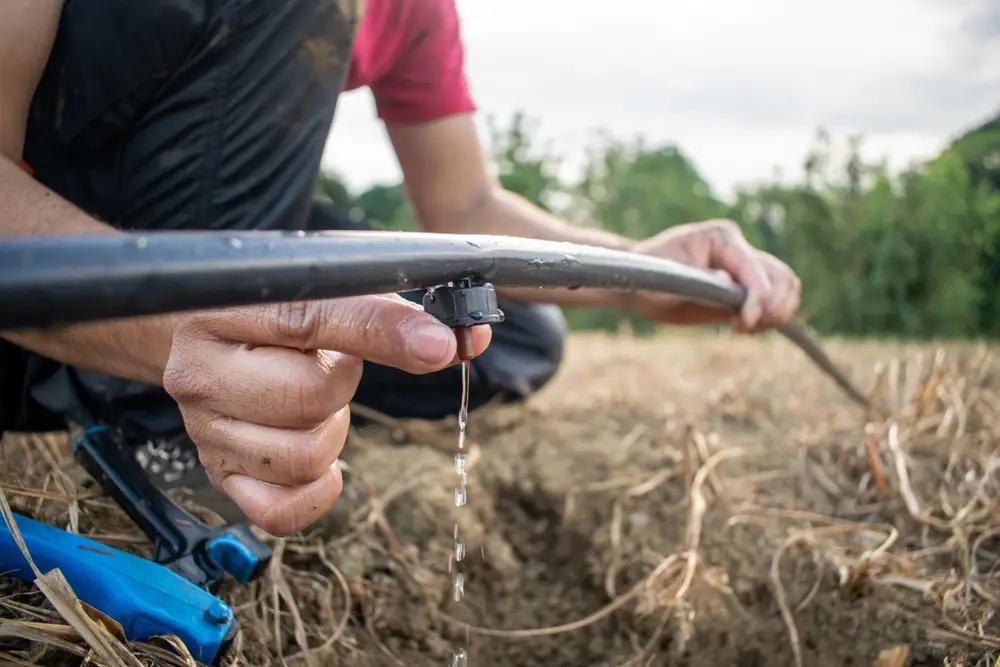
Smart irrigation is at the core of sustainable agriculture, providing a reliable means of reducing water waste without sacrificing crop health. Agriculture consumes more than 75% of the planet’s freshwater, so it’s a serious challenge to meet food requirements without depleting the natural base. Precision irrigation—think drips and sprinklers with remote controls—can reduce water consumption by as much as 90% compared to traditional flooding or furrow irrigation. These systems deliver just the right amount of water, exactly when and where plants need it. That saves water and allows farmers to produce more food with fewer resources. With the world’s population predicted to reach almost 10 billion by 2050, these water-saving measures will be crucial to achieving food targets while employing resources wisely.
Smart irrigation goes beyond water savings. It supports the health of soil by reducing runoff and leaching. When overloaded, those same nutrients, specifically nitrogen and phosphorus, can wash away instead, causing erosion and polluted waterways. By ensuring water goes directly to plant roots, smart systems help keep nutrients put. This reduces the potential for soil erosion and preserves surrounding waterways. Soil sensors and other IoT tools can monitor metrics such as moisture, temperature, and nutrient levels. Farmers can leverage this information to optimize irrigation and fertilization, maintaining robust soil that is less susceptible to runoff. Good soil leads to good yields year after year, which helps make farms sustainable and less dependent on environmentally damaging agrichemicals.
Reducing water waste translates to less greenhouse gases. When fields aren’t over irrigated, less energy is expended in pumping or treating that water. That can translate to less carbon emissions from farms and water utilities alike. Efficient water use contributes to soil’s capacity to store more carbon, helping to mitigate climate change. When it comes to unpredictable weather, such as droughts or flooding rains, intelligent irrigation is able to adapt on the fly to maintain crop health without wasting water or energy. New technologies like nanomaterials can enhance this by making water and fertilizers more effective, resulting in minimal runoff and emissions.
Smart irrigation works best when paired with other best practices that support biodiversity and a healthy ecosystem. Mixed crop farms, cover crops, and natural border farmers supporting pollinators or native species stabilize ecosystems, making it more difficult for pests and diseases to spread. The ability to remotely sense and map means you can detect shifts in plant health or pest populations early, allowing farmers to respond quickly and with fewer chemicals. This approach increases yield while maintaining ecosystem stability, allowing farms to adapt to climate and market fluctuations.
Overcoming challenges in smart irrigation adoption
Smart irrigation can save water and increase crop yields, but many farms and plantations encounter practical challenges when they attempt to deploy these new instruments. Most farms invest big up front on equipment, sensors, and network installation. That’s difficult for small or medium-sized growers, particularly in regions where profit margins remain lean. The cost is prohibitively high to convert existing non-smart irrigation systems, even though long-term savings in water are unambiguous. Research supports the value; IoT-based irrigation can save 90% more water than the old ways and over 12% more yield for grains and nearly 15% more for stalks. Yet the initial leap frequently seems too far away.
A phased approach is good for many. Farms can begin with a small test plot, incrementally add more smart tools, or implement rudimentary systems and upgrade as budgets permit. Certain nations provide governmental rebates or incentives for such water-saving devices. Seeking out these programs can reduce the burden of up-front costs and make smart irrigation more feasible for a broader group of growers.
Technical skills gaps are ubiquitous on plantations, regardless of location. Smart systems require new skills, such as how to use sensor data, interpret digital dashboards, and troubleshoot simple tech issues. If staff don’t feel ready, the risk of mistakes increases and the full benefits never materialize. It’s critical to invest in training, both practical and digital. These can range from leveraging real-time data from soil moisture sensors and tracking crop growth stages to deciphering weather-based recommendations from digital platforms. Training should demonstrate how to identify uneven land leveling, which can cause water to disperse unevenly and reduce system gains. Simple, straightforward training instills trust and keeps the system humming.
Infrastructure can stand in the way as well. Smart irrigation thrives on consistent connectivity and dependable power. In certain rural or remote areas, the internet is unreliable and power outages are frequent. This is a genuine concern because smart irrigation platforms rely on live data and weather forecasts to provide crop-specific recommendations and assist in fine-tuning watering schedules. If the network goes down or the power fails, the data stops and the system might not function properly. Farms can consider solar systems or backup batteries to maintain operations. In certain locations, local mesh networks can assist when broader internet access is limited. Upgrading infrastructure isn’t simply putting water on the field; it’s ensuring that the system can function day after day.
Smart irrigation meets natural limits. For example, uneven land makes water hard to spread evenly, which can waste resources even with advanced tech. Real-time sensor data combined with machine learning can help smart irrigation platforms fine tune schedules to increase water use efficiency by up to 30% only if the soil is optimized beforehand. Drip and sprinkler systems achieve efficiencies of up to 95% and 90% respectively only when paired with the appropriate field characteristics.
Real-world applications and success stories from plantations
Smart irrigation and tech-based tools are already leaving an imprint in the plantations across the globe. It’s not just about saving water; it’s about growing more crops and reducing costs. On some plantations, water use declined 40% to even 70% just by switching to smart irrigation. In some cases, they use soil sensors and weather data to deliver crops precisely the right amount of water. In California, for instance, farmers established smart irrigation through soil moisture sensors. They experienced 10% increases in yield and reduced water consumption by more than 40%. These sorts of outcomes are not uncommon; plantation after plantation demonstrates the same pattern.
Plantations of all types are experiencing improvements. Be it rice paddies in Southeast Asia, vineyards in Europe, or citrus groves in South America, smart irrigation suits all types of plantations. It’s not only for large-scale plantations, either. Smallholder operations have begun to reap the benefits, though uptake is contingent upon factors such as internet availability and local assistance. In South Africa, a mere 46% of smallholder farmers use them, largely due to shoddy internet. Meanwhile, regions with superior tech backstopping and training exhibit greater adoption and success.
These benefits are not confined to water and crops. Some Australian cattle ranches are using sensor-based systems to monitor livestock health and hydration needs. With all this information centralized, managers can respond quickly if there is an issue, reducing time and resource waste. IoT-based smart tools can even trim energy use by up to 30%, which really adds up to big savings for bigger operations.
Yet, change isn’t always seamless. Around 40% of farmers claim that new tech clashes with outdated or legacy equipment. This can bog down upgrades and cause overhead. A few plantations had a rocky start with setup, training, and adoption. The lessons learned from those who pushed through are clear: with patience, training, and the right support, most of the hurdles can be overcome. For most, the ROI is quick—within a couple of years. Within that period, they can experience up to a 40% increase in yields and water savings of approximately 50%.
Here are five actionable steps drawn from these real-world stories:
- Begin by seeing what current equipment can connect with new systems to identify disconnects early.
- Don’t select the most popular smart irrigation system for sale. Select one that works for your size and crop needs.
- Train everyone, from the field staff to managers, on how to use and maintain the new tools.
- Try the system on a small patch first and use feedback to refine before scaling.
- Monitor water consumption, crop development, and savings periodically to demonstrate value and identify potential concerns.
Future trends and innovations shaping plantation irrigation
Plantation irrigation is in a transitional period, influenced by recent technological breakthroughs and an increasing demand for eco-friendly solutions. Industry leaders and growers are seeking tools to save water, increase yields, and reduce costs. By 2025, automated irrigation systems may save up to 30% of water in farming, increase yields by 25 to 30 percent, and reduce costs by over 20 percent. These trends demonstrate a shift toward smarter, greener, and more efficient approaches to maintaining healthy plantations.
AI and machine learning are going to make a big dent on irrigation. Even more plantations are using irrigation systems that perform judgment calls on their own, with minimal or no human intervention. These systems analyze massive data, like soil moisture, weather, and crop growth, to select optimal times and quantities to irrigate. Others can estimate crop water requirements with as much as 89.38 percent accuracy, resulting in reduced errors and wastage. As machine learning matures, the drive toward fully hands-free, self-learning irrigation will probably accelerate, simplifying adaptation to shifts in climate or crop requirements.
Sensor tech is advancing quickly. It used to be that growers only needed a handful of sensors, but these new sensors collect more refined data on soil moisture, air temperature, plant health, and even nutrition levels. The proliferation of IoT devices and wireless sensors is coming fast. These sensors provide real-time data, allowing the system to make immediate adjustments to water consumption. For instance, wireless sensors and actuator networks, occasionally combined with fuzzy logic, enable farmers to monitor and regulate irrigation in real time—even remotely. Drip irrigation and precision irrigation, directing water directly to roots through furrows between crop rows, have become widely used. While potentially resulting in huge water savings, these tools are now more accessible to manage with smart technology.
Cloud-based platforms and mobile apps are simplifying irrigation management and monitoring. These tools allow farmers to see data, adjust settings, and address alerts, all from a smartphone or desktop. Cloud systems can save and analyze years of data, assisting growers in identifying patterns and continuously optimizing. As mobile adoption expands, the transition to app-based controls will increase, adding even greater convenience and flexibility to plantation care.
Regulations and sustainability rules are transforming how irrigation tech is constructed and utilized. Already, many areas are implementing new water use standards or capping the amount of water megafarms can pull. Growers should be diligent and aware of these trends, as potential new legislation could demand systems that consume less water and energy. The drive to renewables, such as solar energy, is on the rise. Solar-powered pumps and sensors can assist growers in reducing carbon emissions and relying less on the grid.
Other trends to keep an eye on are drones and satellite images to check plant health and detect dry patches and the integration of data from multiple sources to assist growers in making more informed decisions. With more plantations adopting smart irrigation and tech tools, these systems will become increasingly common, easier to implement, and more resource-efficient.