Understanding the role of forestry tools in modern practice
Forestry tools influence the manner in which we work in forests today. A dandy tool makes work quicker and more precise. For instance, diameter tapes assist in measuring the diameter of trees in centimeters, while clinometers and laser rangefinders display tree heights and distances. Laser rangefinders can even check angles, which assists in planning where to cut or plant. These tools save time and reduce error. They allow crews to gather data right out in the forest. Phone apps now serve as GPS units or clinometers, so workers can record measurements and map locations even in the absence of cell coverage. For beginners and those on a budget, clinometer apps provide an affordable alternative for verifying tree heights compared to purchasing pricey rangefinders.
Choosing the right tool is important for both safety and outcome. A chainsaw rather than a handsaw can make large projects fly by, but only when used responsibly. A good brushcutter clears tough undergrowth, yet it has to fit the task. Bringing a first aid kit is elementary, yet it is essential. This is why so many forestry guides emphasize bringing one in every kit. Damaged or lost tools hinder work and can even endanger individuals, so it is wise to inspect tools for wear, maintain their cleanliness, and store them properly. Dropping a saw or a clinometer in the woods can be expensive in time and money. Easy things like marking tools or taping them brightly can assist in keeping hold.
These special tools are part of what makes forestry greener. Increment borers, for instance, allow workers to extract a skinny sample from a tree to determine its age or growth rate. These samples aid in deciding which trees to fell and which to preserve. Increment borers cost between $175 and $300, so users have to look after them or they are wasted. Measuring tools like laser rangefinders allow them to document how forests evolve. It fuels initiatives to maintain forests vibrant and alive. Digital record-keeping with apps and GPS allows information to be transmitted immediately, which is great for teams operating in remote locations or covering large expanses.
Forestry gear has evolved quite a bit. Old, trusty axes and saws still play a role, but nowadays they coexist with chainsaws and brushcutters. Workers blend old and new to suit the task. Modern tools may be expensive, but phone apps and digital equipment allow them to be used by a much wider audience. Whether you’re a pro or just a fan, these tools help you tend woods in intelligent and safe ways.
Core cutting and measuring tools for forestry professionals
Forestry work demands a specific set of sharp, rugged tools that assist in achieving job accomplishment and safety. Sawyers’ core tools include saws and measuring devices. Chainsaws have different bar lengths. Saws with 12- to 14-inch bars take care of girdling and other lighter work, while 18- to 20-inch bars are ideal for downed timber, large logs, and firewood. Handsaws still have a haven and are great for pruning or where noise and fuel are an issue. Axes and hatchets aid with clearing small limbs or splitting wood in confined spaces. There’s a time and place for each tool, and selecting the proper size and style results in work that is safer and quicker, and less stressful.
An equally important part of a quality forestry kit would be core cutting and measuring tools. Diameter tapes are flexible and graduated for both diameter in inches and tenths and length in feet and tenths, so they serve multiple purposes. Calipers provide rapid, consistent diameter measurements, particularly on standing trees. Biltmore sticks, at breast height, are quick and dependable when you’re aching for an easy diameter measurement. Increment borers extract a slender core roughly 0.2 inches in diameter from a tree that allows you to measure age and growth by counting rings. Tree and log scale sticks assist in calculating wood volume directly in the field, using scales such as Doyle or International 1/4 Scale. These help you plan harvest and maintain good records.
Navigation and plot layout depend on tools forged for the outdoors. Compasses, azimuth (0 to 360 degrees) or quadrant (0 to 90 degrees), are a must for mapping, cruising lines, or just finding your way. Hand-held clinometers check slopes and tree heights, making them handy for road work or picking safe felling spots. The wedge prism is a compact but essential device for measuring basal area. Its calibration can range from 10 to 70, accommodating both large-scale surveys and the requirements of small woodland owners.
Ruggedness and comfort are imperative. Handles and blades have to withstand rugged use and extended hours. Ergonomic grips aid in reducing hand and arm fatigue, which is a serious issue when laboring all day. These tools oughta be as easy to sharpen as a saw and hold an edge so you spend more time taking care of the job and less time taking care of business!
| Tool | Primary Use | Key Features |
| Chainsaw | Felling, bucking, and limbing | Bar size, power, chain type |
| Axe/Hatchet | Limbing, splitting, clearing | Blade weight, handle shape |
| Handsaw | Pruning, small cuts | Blade length, teeth pattern |
| Diameter Tape | Measuring tree diameter/length | Dual-scale (diameter/length) |
| Caliper | Measuring diameter | Arm length, reading type |
| Increment Borer | Sampling tree core for age/growth | Core size, handle comfort |
| Biltmore Stick | Measuring DBH | Scale clarity, stick length |
| Scale Stick | Estimating log volume | Marked log rules, stick durability |
Navigational and marking essentials for fieldwork
Hard to navigate woods, mark plots in the field – these require solid tools, not just for your safety but for your work. Dependable compasses and GPS units are at the top. In the deep woods, GPS guides you when you lose sight of landmarks, but a cheap compass, priced between $15 and $50, remains a necessity. It’s lightweight, battery-free, and works even when the GPS fails or the signal fades. Both provide a backup should one go down and using both means you double-check your position as you travel through unfamiliar or complicated land.
Demarcating boundaries and study plots requires visible, permanent signage. Flagging tape is the fieldwork staple. It is available in vinyl, which lasts a few years, or biodegradable, which is good for around a year. Select the appropriate type according to local regulations and desired longevity of the markings. Paint markers, too, with bright colors on trees or rocks make lines impossible to miss. These markers keep you and your team from walking around like a lost herd of buffalo, and they ensure you are sampling or working in the right locations every time. For large tracts or extended projects, refresh faded flags and repaint old marks to maintain clarity.
Clinometers are another important piece of equipment. They measure tree heights, which is required for forest inventory and planning. Understanding the tree’s height assists in determining what to keep or cut and in monitoring how a stand grows. Laser rangefinders or hypsometers take it a step further. These instruments can measure distance, angles, and heights. Some include a 2-point mode, while others have a 3-point mode for when you cannot see the top and base of a tree simultaneously. This is useful when the underbrush is dense or the terrain is sloping.
Another modest yet crucial implement is the forestry D-tape, commonly running between $35 and $40. It makes quick work with minimal fuss of a tree’s diameter. Increment borers are necessary in case you need to verify tree age and growth, costing between $175 and $300 depending on size and construction. I tend to lose things like tape measures, so remember the last place you used it. It will pay off in saved time and stress down the line.
Navigation and marking fundamentals for the field. Before you go, list your navigation and marking fundamentals. Write it down or note app it. Compass, GPS, flagging tape, paint markers, clinometer, rangefinder or hypsometer, D-tape, increment borer, extra batteries. A checklist prevents you from forgetting something, which keeps the work moving and prevents double trips.
Prioritizing safety and protective equipment in forestry
Forestry work carries a lot of hazards, so donning the proper protection isn’t simply sensible. It’s imperative. Right gear protects you from cuts, falls, flying debris, and loud noise. Every piece from helmets to gloves is selected with purpose, forged by the tangible hazards forestry professionals encounter daily. Apparel and accessories aren’t just for comfort; they are your number one protection against bladed machinery, descending branches, and unexpected storm fronts. Weather shifts quickly in the forest, so layers and moisture-wicking fabrics keep workers dry and safe.
Duh, helmets! A hard hat with adjustable straps and global safety standards compliance is key. This guards against stinging branches and accidental knocks. Eye protection follows—clear, shatterproof goggles or safety glasses protect against wood chips and dust. For ears, hearing protection is essential. Chainsaws run at near 120 decibels, so earplugs or earmuffs are required to prevent hearing loss, which occurs rapidly and is irreversible.
Hands and feet get hit up a lot in forestry. Cut-resistant gloves shield hands from chainsaws, thorns, and splinters. Search for gloves that are crafted with reinforced fibers like Kevlar. For feet, steel-toed boots with grip soles assist in preventing deep crush or puncture injuries. They stabilize footing on moist or rough terrain.
Visibility counts for a lot, particularly in dense woods or dimming light. High-visibility vests, jackets, or hats in bright, reflective colors assist coworkers and machine operators in spotting one another. This reduces the danger of accidents, particularly when multiple people operate in close proximity.
Below is a list of core safety and protective equipment for forestry work:
- Hard hat (helmet) with adjustable suspension and safety standard label.
- Shatterproof safety goggles or face shield
- Earplugs or earmuffs, rated for high decibel protection
- Cut-resistant gloves (preferably with reinforced fibers)
- Steel-toed boots with anti-slip soles
- High-visibility clothing (vests, jackets, or hats)
- Durable, layered clothing made of breathable, moisture-wicking materials
- First-aid kit containing bandages, gauze, disinfectant, painkillers, and more.
- Chainsaw chaps or pants for added leg protection
- Safety harness and climbing gear are essential if doing tree work or working on steep terrain.
A good first aid kit is as essential as any implement. It should have fundamentals such as adhesive bandages, gauze, antiseptic wipes, and pain medicine. It’s only useful if workers understand how to use it. Learning some core wilderness first aid skills, like how to stop bleeding or treat burns, can be life-saving when help is a long way off.
Maintenance is the most underrated. It matters. Inspect and clean all equipment before and after use. Change out worn parts or damaged items immediately. Well-maintained equipment is more likely to work when you need it and provide the best protection. In forestry, safety equipment is both the frontline and final front to brutal working environments.
Specialized tools for advanced forestry tasks
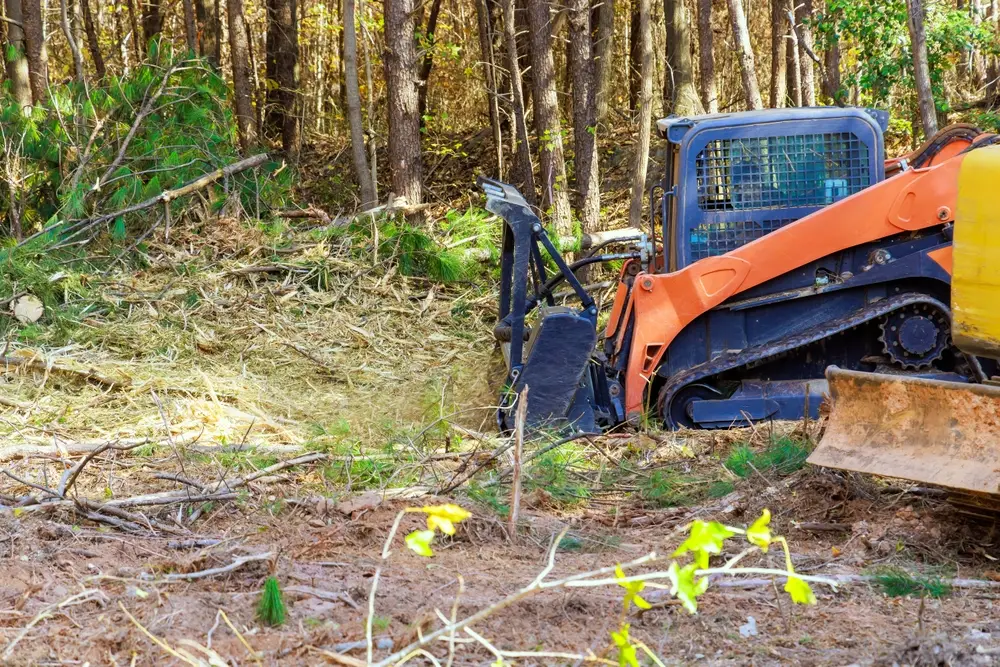
Forestry work often goes beyond basic hand tools, calling for a range of advanced equipment that helps professionals and enthusiasts work safer, faster, and with more precision. These specialized tools do more than just cut or move wood. They help assess forest health, boost efficiency, and support sustainable forestry practices. Some of these tools are simple and have been around for decades, while others use the latest technology to provide real-time data and make complex tasks much easier.
Increment borers and soil augers are must-haves for anyone wanting to really understand a forest. An increment borer is a tool that takes a thin core from a living tree, letting users count tree rings and figure out age or growth rates without hurting the tree. These come in different lengths and can run from $175 to over $300, depending on size and quality. Soil augers are used to pull up soil samples at various depths. They show soil texture, moisture, and root conditions, which matter a lot for replanting or checking site health.
Working logs is hard work. Log tongs and cant hooks will make it much safer and faster. Log tongs grip logs so they can be lifted with minimal work, by hand or machine. Cant hooks, elongated robust handles featuring a swiveling hook, enable you to roll, lift, or reposition logs with increased precision and reduced effort. Both are common for yarding timber, clearing land, or lining up logs for milling. With the right log handling tool, you reduce injury and save time, particularly when dealing with large or unwieldy pieces.
When it comes to measuring and mapping, technology now plays a bigger role. Laser rangefinders and hypsometers are used to measure distances, tree heights, and angles with just a point and click. Wedge prisms and angle gauges, now often fitted with IoT sensors, give real-time readings on tree density, stem angles, and diameters. These tools help foresters plan harvests or assess stands with accuracy and speed. Diameter tapes, called DBH tapes, wrap around tree trunks to estimate diameter at breast height, a basic but important metric in forestry. Chainsaws with 45- to 50-centimeter (18- to 20-inch) bars are best for cutting downed trees and logs, making them ideal for cleanup or firewood tasks.
Digital tools are impacting forestry. Phone apps serve as GPS units and allow users to gather and record stand data, even offline. There are even apps that make smartphones into clinometers, letting you measure tree heights inexpensively, using math and the phone’s sensors. These digital alternatives are gaining traction, as they are cost-effective and simple to deploy in the field.
Below is a table showing specialized forestry tools based on different objectives and site conditions:
| Objective | Site Condition | Tool Example |
| Tree Health Assessment | Any forest type | Increment borer, soil auger |
| Log Handling | Logging sites | Log tongs, cant hooks |
| Distance/Height Measuring | Dense stands | Laser rangefinder, hypsometer |
| Stand Density Measurement | All site types | Wedge prism, angle gauge |
| Diameter Measurement | Mixed forest | Diameter tape |
| Cutting/Processing | Downed timber | Chainsaw (18-20 inch bar) |
| Digital Data Collection | Remote locations | GPS/clinometer phone apps |
| Harvesting & Moving Logs | Commercial sites | Harvester, forwarder |
Innovations and technology integration in forestry tools
Forestry has come a long way from its axe and saw heritage. Today’s experts and hobbyists use a combination of high-tech and old school gear. These innovations assist with accurate measurement, intelligent planning and smarter maintenance of forest zones. The digital transition enables additional data to be captured and shared in real time, helping to make forest management more precise.
Digital clinometers and laser rangefinders are now standard for tree heights, distance, and slope. These tools reduce errors and are more efficient than traditional methods such as tape measures or manual calculation. Thanks to laser rangefinders, you can measure how far a tree is in seconds, even on steep terrain or in a thicket. Digital clinometers display angles and heights immediately, facilitating both quick estimates and detailed analysis. Many of these tools now connect with mobile apps to save information on the fly, reducing the chance of misplaced or confused scribbles.
Drones and LiDAR have transformed the way specialists map forests. Drones can fly over massive tracts, shooting overhead photos and videos. This facilitates the identification of diseased trees, flood damage, or areas of regrowth. Drones with LiDAR equipment emit laser pulses to create precise, 3D maps of the terrain and canopy. This provides a bird’s eye view of tree heights, forest openings, and even ground beneath dense leaves. With drones and satellite imagery, a task that took weeks on foot can now be completed in just a few days. They get to places that are difficult or dangerous for humans to access.
Mobile apps and smart devices are facilitating easier collaboration for teams. Mapping and data collection apps allow users to record tree locations, soil types, and wildlife signs directly on their phones or tablets. Other apps refresh maps in real time, so everyone on the crew views identical data, no matter their location. This aids in planning, progress checking, and report sharing. Tools such as wedge prisms and angle gauges, now equipped with IoT sensors, provide real-time information on tree density and diameter. These sensors can monitor changes through the years, assisting in identifying trends or abrupt transformations.
Forestry tools today, for instance, tend to blend soil, tree, and climate data into a single hub. Platforms that collect data from sensors, drones, and boots on the ground contribute to a comprehensive image of the forest. This allows managers to make more informed decisions such as selecting prime locations for planting, when to thin trees, or catch early pest infestations. Autonomous vehicles operate increasingly year-round regardless of weather or terrain. These machines manage activities such as planting, thinning, or transporting equipment, liberating humans for work that requires a personal touch.
Forestry tech new releases continue to blow our minds. As tools get smarter, they assist with both more output and gentler care for the land. Continuous monitoring allows managers to detect and address issues before they exacerbate. This helps forests remain healthy and productive over the long term.
Best practices, maintenance, and eco-friendly choices
Forestry work requires more than the right tools. It requires thoughtful maintenance, secure storage, and sustainable decisions that honor both individuals and the environment. A handful of simple guidelines assist both the pro and the hobbyist in maintaining their kit in peak condition while making decisions that reduce environmental damage.
Tool care starts with regular cleaning, sharpening, and inspection. Saws, axes, and pruners all require their blades to be kept sharp to operate safely and reduce the potential for mistakes. Squeegee your tools after each use to remove any sap, dirt, or vegetation. Use a stiff brush and mild soap for more stubborn gunk. Dry each tool immediately to prevent rust. As for moving parts, such as those found on chainsaws or pruners, a thin film of oil keeps them gliding smoothly and reduces friction. Chainsaws require frequent chain inspection and sharpening. Dull blades impede work speed and increase kickback potential. Bent or loose chains should be fixed or replaced before your next use. For safety, a routine check-up identifies cracks or handle bends early, preventing injury.
Putting away your tools the proper way helps a bunch. Store all gear in a dry, locked shed or storage box to keep out moisture and critters. Hanging racks or wall hooks keep sharp blades off the ground and reduce the risk of accidents. Use blade guards or sheaths for axes, saws, and machetes. It not only keeps the edge sharp, but helps protect anyone who reaches for the tool. For power tools such as chainsaws, keep them with empty tanks and clean filters to reduce the fire hazard and maintain motor health.
Eco-friendly begins with what tools you select. Seek out tools with recycled steel or sustainably harvested wood certified handles. When flagging trees or trails, opt for biodegradable flagging tape over plastic. They typically biodegrade within a year, reducing waste. When a tool is beyond repair, check to see if the components can be recycled instead of discarded. Most metal parts can be taken to local recycling centers.
Smart use and tech can assist in keeping forestry work safe and green. Training, particularly for chainsaws, is crucial for safety and optimal outcomes. Utilizing the proper size equipment for every chore makes it go faster and safer, like an 18- to 20-inch bar chainsaw for chopping up downed trees. New tech, like IoT-enabled tools, provides real-time data on tree size and density, empowering teams to strategically plan the work and reduce waste. Tools such as diameter tapes and clinometers maintain sustainable forestry by assisting workers in tracking resources mindfully. Always consider the agricultural chemicals applied, applying them for need and in ways that reduce damage to humans and the environment.